Xtratuf Fishing Boots Review: Are They Worth the Hype?
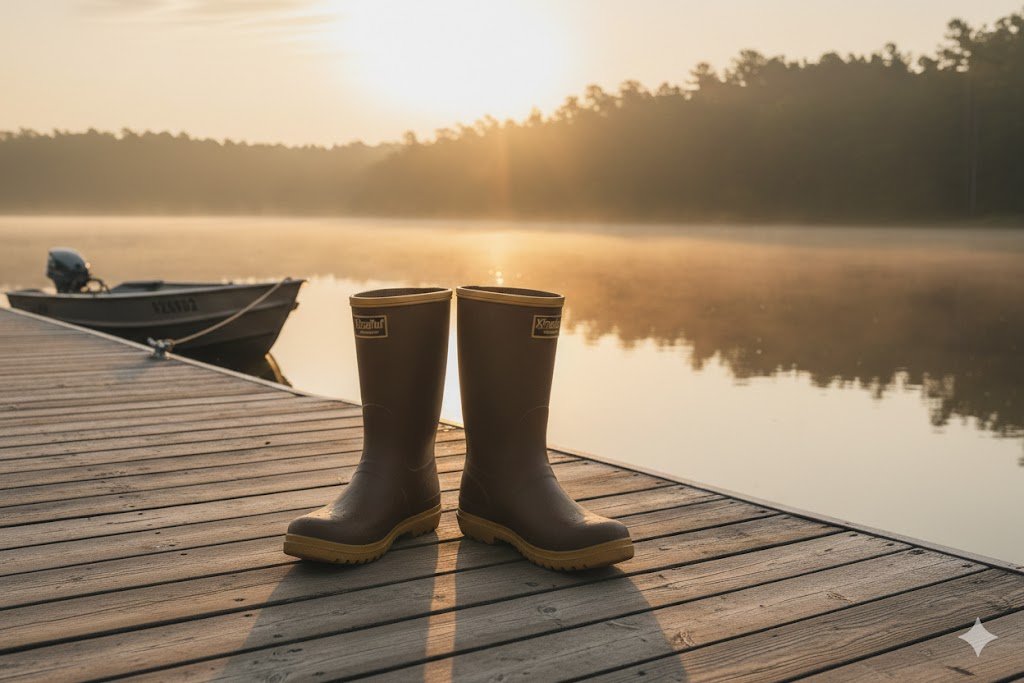
The Gold Standard for Deck Boots
If you spend any time around commercial fishermen in Alaska, the Gulf, or the Great Lakes, you'll notice something: they're all wearing the same boots. Not because of some sponsorship deal, but because Xtratuf boots are what actually works when your deck is covered in fish slime, diesel fuel, and salt water.
I'm not a commercial fisherman, but I've spent enough weekends on the water in Mississippi and Alabama to know the difference between boots that say they're waterproof and boots that actually keep your feet dry when you're standing in three inches of water cleaning fish at 2 AM.
Check Current Price - Xtratuf Legacy Boots
Why Xtratuf Boots Are Different
The Triple-Dip Neoprene Construction
Most "waterproof" boots use a thin rubber coating over fabric. Xtratuf uses 100% waterproof neoprene - the same material in wetsuits - with a triple-dipped outer layer. This isn't marketing talk. It means:
- Actually waterproof, not "water resistant for 30 minutes"
- Flexible enough to wear all day without your feet screaming
- Insulated enough for early morning launches in November
- Durable enough to last 3-5 years of hard use
I've seen guys wear the same pair of Xtratufs for a decade. Try that with $40 Walmart boots.
The Chevron Outsole Pattern
The bottom of these boots has an aggressive tread pattern designed specifically for wet, slippery surfaces. It's not some generic work boot sole - it's engineered for fish slime and algae-covered boat ramps.
Does it work? I've never once slipped on a wet dock wearing these. I can't say that about any other boots I've owned.
Sizing Runs Large
This is important: Xtratuf boots run about a half-size to full-size large. If you wear a size 10 sneaker, order a size 9 in Xtratufs. They're designed to fit over thick socks, and the neoprene has some give to it.
Who These Boots Are For
Bass Boat Fishermen
Your boat deck gets wet from rain, morning dew, and inevitable splashing. Regular sneakers turn into slip-and-slide accidents waiting to happen. Xtratufs give you grip and keep your feet dry from launch to weigh-in.
Bank Fishermen
Muddy riverbanks, wet grass at dawn, standing in shallow water to reach that perfect spot - these boots handle all of it. The 15-inch height keeps water out even when you're wading in deeper than you planned.
Guys Who Run Trotlines or Jug Lines
If you're checking lines before sunrise in cold water, neoprene boots are the difference between enjoying your morning and suffering through it. The insulation keeps your feet warm without the bulk of insulated rubber boots.
Not For:
- Hiking long distances (they're deck boots, not trail boots)
- Hot summer days on dry land (neoprene insulation works both ways)
- People who need steel toe protection
Real Talk: The Downsides
The Price
At $150-ish, these aren't cheap. You can buy three pairs of cheap rubber boots for the same money. But here's the math: Cheap boots last 6-12 months of regular use. Xtratufs last 3-5 years minimum. You're actually saving money long-term, plus your feet don't hurt at the end of the day.
They Run Hot
Neoprene insulation is great in November. It's miserable in July. These are spring/fall/winter boots. If you're fishing in 90-degree weather, wear something else or accept that your feet are going to sweat.
Break-In Period
Brand new Xtratufs are stiff. Give them 2-3 trips before they feel comfortable. Don't buy them Friday night and expect to fish a tournament Saturday morning. Plan ahead.
The Xtratuf Legacy Boot vs. Other Models
Xtratuf makes several models. Here's what matters:
Legacy Boot (Original) - This is the classic. 15-inch height, neoprene, Chevron sole. This is what you want.
Ankle Deck Boot - Shorter (6-inch) version. Good for dry boat decks, not for anything involving water deeper than a puddle.
6-Inch Boot - Middle ground. Fine for most fishing, but if you're going to spend $150, get the full 15-inch protection.
Stick with the Legacy Boot. It's the original, and it's what actually works.
Check Current Price - Xtratuf Legacy Boots
What You Get Long-Term
I bought my first pair of Xtratufs in 2018. They've been on probably 100+ fishing trips, countless mornings walking wet boat ramps, and more than a few days cleaning fish in ankle-deep water.
The neoprene is still waterproof. The tread still grips. The only wear I see is some scuffing on the toes from kicking around tackle boxes.
Compare that to the four pairs of "waterproof" boots I went through in the three years before I bought Xtratufs, and you see why these have a cult following.
Sizing Guide
Order down at least a half size, maybe a full size:
- Sneaker size 10 → Order size 9
- Sneaker size 11 → Order size 10
- Sneaker size 12 → Order size 11
The boots have room for thick socks, and neoprene stretches slightly with wear. Better to start snug than sloppy.
If you're between sizes (like 10.5), definitely go with the smaller option (size 9).
Technical Specs
[INSERT DETAILED SPECS]
- Height: 15 inches
- Material: 100% waterproof neoprene
- Construction: Triple-dipped latex outer layer
- Outsole: Chevron pattern, non-marking
- Insulation: Neoprene (not rated, but functions down to ~20°F comfortably)
- Weight: ~2.5 lbs per boot
- Made in: USA (Rock Island, Illinois)
- Warranty: 30-day manufacturer defect coverage
Bottom Line
At $150, Xtratuf Legacy Boots are expensive for rubber boots. But they're not rubber boots - they're neoprene deck boots engineered for commercial fishing conditions and built to last years, not months.
If you fish more than a few times a year, these boots will pay for themselves in durability, comfort, and the fact that you'll never slip on a wet boat deck again.
Order a half-size down, give them a couple trips to break in, and you'll understand why every serious fisherman from Alaska to the Gulf Coast wears the same boots.
Full disclosure: I earn a commission if you purchase through the links above, at no extra cost to you. These are boots I actually wear and recommend based on years of use, not just specs on a website.